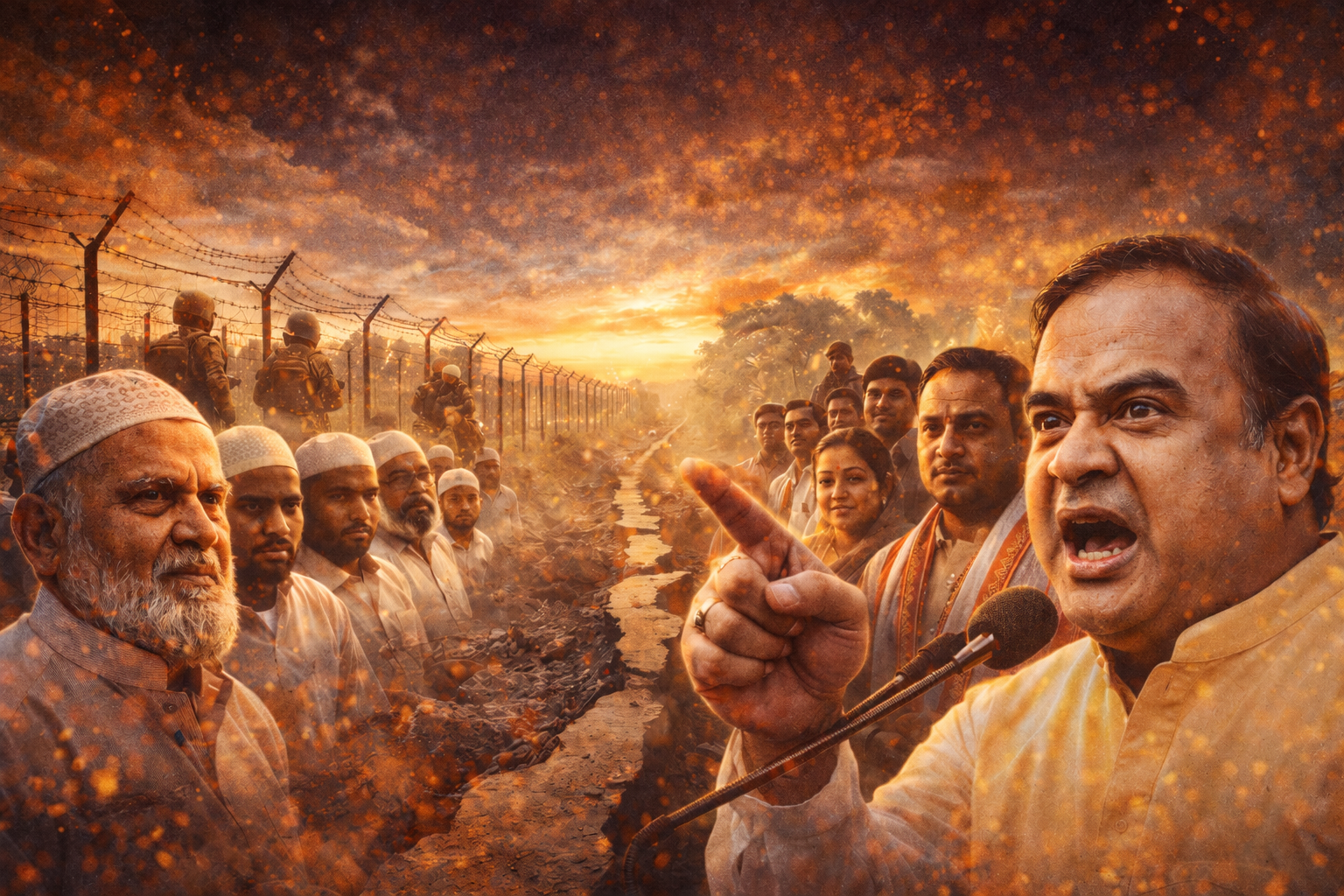
Assam Chief Minister Himanta Biswa Sarma frequently finds himself at the center of political controversy, and his remarks regarding “Mia Muslims” are a prime example. These comments, steeped in the complex demographic and political landscape of Assam, have drawn sharp criticism, even leading to calls for Supreme Court intervention. Beyond the contentious terminology, Sarma’s views on Bangladeshi immigration and the perennial challenges of securing the region’s porous borders, particularly with Bengal, underscore the deeply sensitive nature of identity and security in the northeastern state.
The ‘Mia Muslim’ Controversy: Definition and Context
Himanta Biswa Sarma’s use of the term “Mia Muslim” has sparked considerable debate. During the interview, he clarified the specific meaning of the term within the Assamese context. When pressed by Arnab Goswami about why he constantly refers to “Mia Muslim” and suggests “punishing” them, Sarma responded that in Assam, “Mia Muslims are used against Bangladeshi” or Bangladeshi Muslims . He further clarified that, intrinsically, “MIA means a respected S,” but in Assam, “Mia Muslim” is “synonymous with Bangladeshi“. This implies that his usage specifically targets those of Bangladeshi origin, often perceived as illegal immigrants, rather than the broader Muslim community.
Sarma vehemently defended his stance, asserting that it is his “job as a chief minister of Assam” to “target Bangladeshi” if others do not. He dismissed concerns about former ambassadors and intellectuals approaching the Supreme Court over his comments, stating, “No let let them go”. The Chief Minister’s strong rhetoric suggests a political strategy aimed at consolidating support among the indigenous Assamese population by identifying and confronting what he portrays as an existential threat to their demographic and cultural identity. He highlights that Assam has been fighting this issue “from 1979“. Sarma frames the issue as a fight for survival for the Assamese majority, claiming, “We are becoming minority minority. We have finished in 13 district. Why you are finishing us? Think about us also“.
The Challenge of Bangladeshi Immigration and Porous Borders
Central to Sarma’s political narrative is the issue of Bangladeshi immigration and the acute challenges of border security. He consistently draws a distinction between legal and illegal immigrants. Sarma clarified that the state has “no fight” with “those Bangladeshi who come legally [and] become legal citizen of some“. However, his primary focus is on curbing illegal infiltration, which he views as a severe demographic and security threat.
The Chief Minister points to the daunting task of securing Assam’s borders, especially given the shared and often porous boundaries with Bangladesh and West Bengal. He admits that blocking borders is an ongoing struggle, but emphasizes that “Bengal must block borders” as well. Sarma explains that while Assam’s segment of the border sees active collaboration between the BSF (Border Security Force) and Assam police to push back intruders daily, “there are poorest border in Assam Bangladesh and open border in Bengal and Bangladesh“. He claims, “Every morning we push back 30 people who entered into Assam“, indicating a continuous influx.
Sarma’s frustration with the porous borders, particularly those in Bengal, is evident. He suggests that many immigrants are “coming from Bengal to Assam” , implying that lax border management in West Bengal exacerbates Assam’s problems. He believes that if the BJP were to win in Bengal, the problem of illegal immigration “will end” , indicating a political solution to a geographical and security challenge. Sarma’s rhetoric underscores a sense of urgency and desperation, acknowledging that Assam may be “lost the battle but we don’t want to lost the battle without fight“.
In conclusion, Himanta Biswa Sarma’s “Mia Muslim” comments are intrinsically linked to his broader concerns about Bangladeshi immigration and border security in Assam. His controversial statements serve as a potent political tool, aimed at mobilizing support among the indigenous population by highlighting perceived threats to their identity and culture. While generating significant backlash, his stance remains firm: securing the borders and addressing illegal immigration is not just a policy imperative but, in his view, a fight for Assam’s very survival.
Related Posts
Epstein Files Controversy in India: How Old Diplomatic Emails Sparked a Political Storm
Gaurav Gogoi’s Pakistan Trip: Unpacking the Explosive National Security Allegations