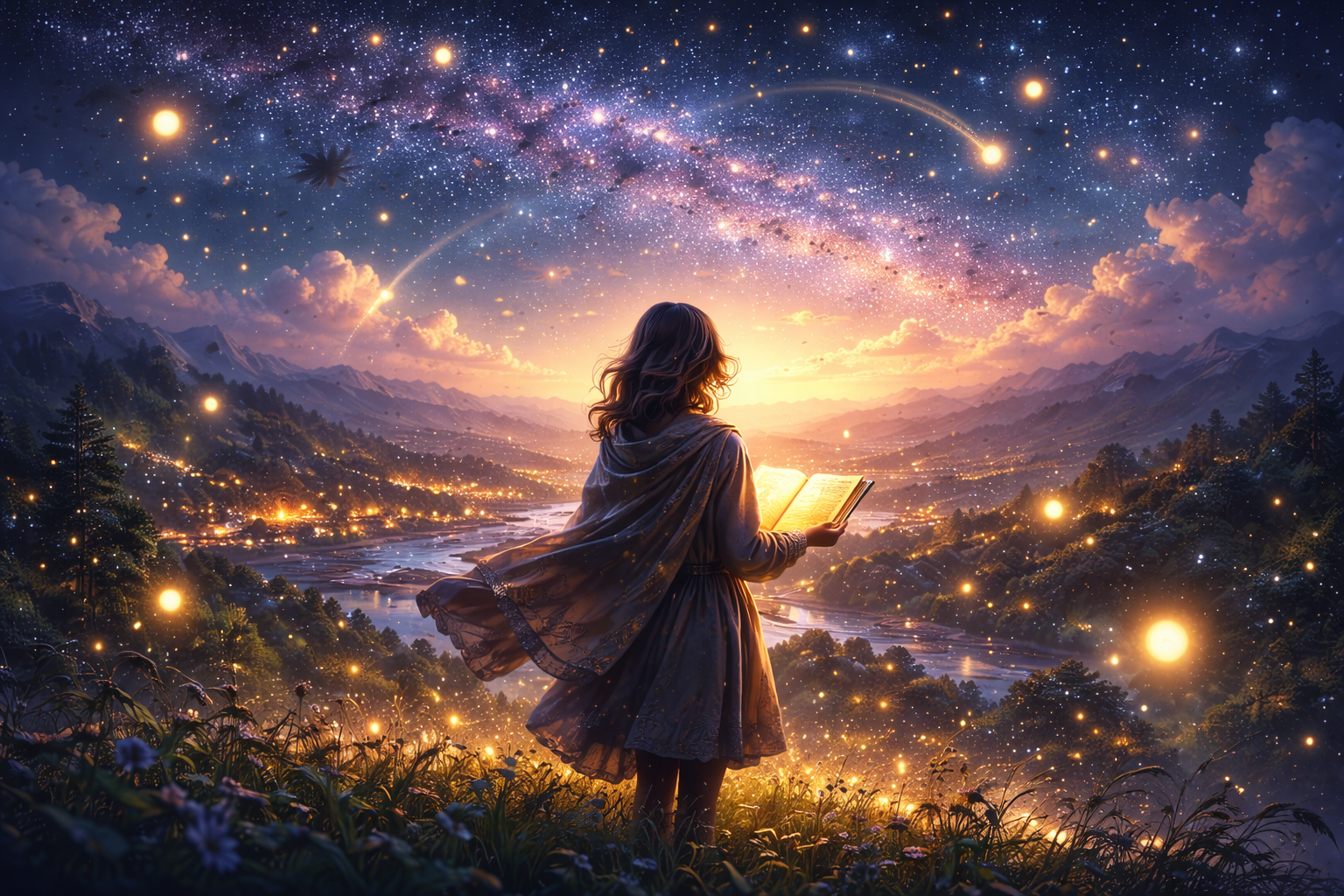
What Do We Mean by “Magic”?
When we speak of magic, we are not talking about illusions, superstition, or the suspension of reason. The magic that sustains life is quieter and far more essential. It is wonder, curiosity, hope, and the belief that life contains meaning beyond mere survival. It is the feeling that something unseen but real connects our efforts, emotions, and dreams.
Modern life, however, takes pride in being rational and efficient. We celebrate logic, data, productivity, and predictability. Everything must be explained, measured, justified. While this progress has brought comfort and control, it has also stripped life of mystery. In removing the unknown, we often remove the emotional depth that makes existence feel alive.
Without magic, life becomes functional but lifeless. We wake up, perform tasks, meet deadlines, and return to sleep, repeating the cycle with increasing efficiency but decreasing joy. Magic is what turns living into more than maintenance. It gives texture to time, purpose to effort, and meaning to endurance. When it disappears, life doesn’t end biologically—but something far more important quietly fades.
Childhood : The Age When Life Felt Infinite
Children live naturally in a magical state. They see stories in shadows, faces in clouds, adventure in empty streets. Ordinary moments feel expansive because they are approached with curiosity rather than expectation. A simple walk can feel endless, a question can open worlds, and imagination fills the gaps where certainty does not yet exist.
This imagination is not escapism; it is a survival tool. It allows children to process uncertainty, fear, and possibility without being overwhelmed. Through imagination, they learn resilience, creativity, and emotional intelligence long before they learn logic.
Yet as we grow, we are taught to outgrow wonder. Curiosity becomes distraction, imagination becomes immaturity, and magic is dismissed as childish. In doing so, we don’t just lose fantasy—we lose openness. We trade infinite possibility for premature certainty, not realizing that what we call “growing up” is often the slow narrowing of perception.
Adulthood : When Life Becomes Too Explained
Adulthood brings responsibility, structure, and clarity—but it also brings excessive explanation. Life becomes optimized. Days are broken into tasks, goals, metrics, and outcomes. Productivity replaces presence. Efficiency replaces experience. Slowly, awe is replaced by analysis.
There comes a moment when life feels like a checklist rather than a journey. Wake up, work, pay, repeat. Even joy becomes scheduled, curated, and optimized. We know too much about how things work, but too little about why they matter.
Over-explanation drains meaning because mystery is where emotional engagement lives. When everything is reduced to utility, nothing feels sacred. Magic doesn’t disappear because life gets harder—it disappears because life becomes too predictable, too dissected, too controlled to inspire wonder.
Magic as Emotional Oxygen
Magic is emotional oxygen. It is the belief that something meaningful lies ahead, even when evidence is thin. Hope is magic. Love is magic. Creativity is magic. Faith—whether in people, purpose, or possibility—is magic. These beliefs are not irrational; they are necessary.
People survive hardship not because conditions are favorable, but because they believe effort will lead somewhere worthwhile. When that belief disappears, resilience collapses. Without magic, struggles feel pointless, effort feels wasted, and endurance feels cruel.
Magic allows us to keep moving without certainty. It allows us to imagine futures before they exist. It keeps the inner world alive when the outer world feels heavy. Remove that, and people don’t just slow down—they break.
The Cost of Disbelief — Cynicism, Burnout, and Emptiness
Cynicism is not intelligence; it is exhausted hope. It is what remains when magic has been repeatedly dismissed or disappointed. The cynical mind rejects wonder as naïve and replaces curiosity with suspicion. Over time, this creates emotional dryness.
Burnout is often mistaken as physical or professional exhaustion, but at its core, it is a crisis of meaning. People don’t burn out because they work too hard—they burn out because they stop believing their work leads anywhere meaningful.
When disbelief takes over, life becomes survival rather than living. Days pass without depth, achievements feel hollow, and rest no longer restores. This is the true cost of losing magic—not fantasy lost, but vitality drained.
Science, Reason, and Magic : Not Opposites
Science did not begin with certainty; it began with wonder. Every great scientific leap started with someone looking at the world and asking why. Curiosity, not calculation, was the original spark. Wonder came first—methods followed later. In that sense, magic and reason were never enemies. Magic was the question; science became the answer.
The problem arises when reason forgets its roots. When life is reduced entirely to data points, algorithms, and outcomes, something essential is lost. We gain precision but lose perspective. Knowing how something works does not automatically explain why it moves us. Awe is the bridge between logic and meaning. It reminds us that understanding does not cancel mystery—it deepens it. A star mapped by science can still inspire silence. A brain understood biologically can still produce love, art, and imagination that defy reduction. When reason makes space for awe, life remains intelligible without becoming empty.
Love, Art, and Faith : Where Magic Still Lives
Love is perhaps the most irrational belief humans hold—and the most necessary. It asks us to invest emotionally without guarantees, to trust without proof, and to care deeply in a world that offers no certainty in return. No spreadsheet can justify love, yet life without it feels unbearably thin. Love is magic precisely because it refuses logic and yet sustains meaning.
Art and music serve a similar function. They bypass explanation and speak directly to something ancient and quiet within us. A melody can bring tears without telling a story. A painting can move us without argument. These moments remind us that not everything meaningful must be useful.
Faith, in its truest form, is not blind belief or rigid doctrine. It is trust—trust that life has depth even when clarity is missing. Faith does not reject doubt; it survives alongside it. Where love, art, and faith exist, magic survives—not loudly, but persistently.
Reclaiming Magic in an Ordinary World
Reclaiming magic does not require dramatic transformation. It begins with slowing down. Paying attention. Choosing curiosity over dismissal. Magic hides in ordinary moments when we stop rushing past them. A morning silence, a shared meal, a familiar street at dusk—these are not insignificant. They become meaningful when we allow them to be.
Rituals, even small ones, anchor us. They remind us that repetition does not have to be emptiness. Meaning grows through attention, not novelty. Allowing mystery is another quiet rebellion against control. Not everything needs immediate explanation or resolution. Some things are meant to be felt, not solved. When we stop demanding certainty from life, it often gives us depth instead.
To Live Is to Believe in Something More
Life without magic is efficient, structured, and manageable—but it is also hollow. It functions well, yet feels thin. Magic does not deny reality; it gives reality dimension. It allows us to endure uncertainty without collapsing into despair.
When wonder dies, existence becomes mechanical. Days blur into function, achievements lose weight, and survival replaces living. To believe in magic is not to reject reason—it is to remember why reason mattered in the first place. To live fully is to believe that life contains something more than what can be measured, explained, or optimized. Without that belief, life may continue—but it stops feeling alive.
Related Posts

The Discipline of Growth: How Challenges Shape Your Potential and Build True Strength

The Illusion of Starting Fresh: Why Waiting for the Perfect Moment Keeps You Stuck